%2Ffit-in%2F250x250%2Fguide_websites%2F6136%2Fimages%2Fimageedit_3_5920617502.png&w=1920&q=100)
Fishing Charter Catch in Corpus Christi TX
Fishing Charter Experience in Corpus Christi - What to Expect
%2F%2Fusers%2F9ce6b195-0116-440a-a783-89fae48e9e8f%2Fimages%2Fcorpus-christi-fishing-charter-success-2653.jpg&w=1920&q=75)
Fishing Charter by Captain Spencer Arnold in August
Meet your Captain Spencer Arnold
- Deep Sea Fishing in Corpus Christi


Summary
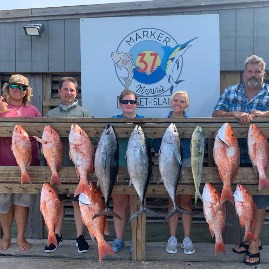
Join a fishing charter in Corpus Christi on the Texas coast to experience hands-on saltwater fishing. This charter adventure showcases what successful coastal fishing looks like, with multiple species caught and carefully displayed on the dock. Learn from experienced local guides who understand the nuances of inshore and offshore fishing conditions.
Fishing Charter with Captain Spencer Arnold - Rates & Booking
Captain Spencer Arnold of Blue Rush Charters offers fishing charter experiences in Corpus Christi on Wednesday, August 6th. When you book a charter with Spencer, you're joining an experienced guide who understands the coastal waters and fish behavior patterns that make Corpus Christi a productive fishing destination. Contact Blue Rush Charters to reserve your spot and inquire about current rates, guest capacity, and what's included with your charter package.
Highlights of the Corpus Christi Fishing Experience
A fishing charter in Corpus Christi offers access to some of Texas's most productive coastal waters. The dock display shown in this gallery demonstrates the variety and abundance available when conditions align and technique meets local knowledge. Multiple species can be caught on a single trip, depending on seasonal patterns and water conditions.
Fishing from a professional charter provides structure, safety, and educational value. You'll learn how to identify productive fishing zones, understand what attracts different species, and develop techniques that improve your success rate. The Corpus Christi area supports year-round fishing opportunities with shifting species availability as seasons change.
Local Fishing Insights for Corpus Christi Waters
Corpus Christi sits on the Texas Gulf Coast where multiple ecosystems converge - bays, nearshore reefs, and deeper offshore zones all within reasonable travel distance. These varied environments support diverse fish populations and create different fishing scenarios depending on where the charter operates.
Inshore bay fishing targets species adapted to shallow, brackish waters with complex structure like seagrass beds and oyster reefs. These areas require different techniques than offshore fishing, where species relate to open water, current lines, and deeper structure. A knowledgeable charter captain understands how to read these environments and position the boat where fish concentrate.
Fish behavior changes throughout the year based on water temperature, salinity, light cycles, and food availability. Spring and fall often bring predictable feeding patterns as species migrate between shallow winter grounds and deeper summer zones. Summer fishing requires adjusting to higher water temperatures and different timing windows. Winter brings unique opportunities as fish compress into specific depth ranges.
The Gulf Coast's productivity stems from nutrient-rich waters that support abundant forage fish and crustaceans. This food availability attracts larger predatory species that feed systematically throughout the day. Understanding feeding periods - early morning, late afternoon, and around tide changes - helps maximize your success. Tidal movement in coastal areas creates current and oxygen circulation that triggers feeding activity.
Plan Your Fishing Charter Day
When booking a charter experience, confirm what equipment and safety gear is provided by the company. Most professional charters include fishing tackle, safety equipment, and guidance on technique. Bring personal items like sunscreen, polarized sunglasses for spotting fish, and appropriate clothing for sun and wind exposure on the water.
Charter groups typically accommodate multiple guests, which creates a social fishing experience. Understanding group dynamics - taking turns, sharing fishing zones, and working together - enhances the experience for everyone. Your captain will coordinate fishing positions and rotations to give each angler quality time at productive spots.
Timing matters significantly in coastal fishing. Early morning often provides optimal light conditions for spotting fish and better feeding activity before midday heat. Late afternoon fishing also produces good results as water temperatures moderate and fish resume active feeding. Tide schedules, sunrise and sunset times, and seasonal factors all influence when your charter operates most effectively.